We all know ultra processed food isn’t particularly good for us, but have you ever wondered whats actually happening inside our bodies when we eat it?
Theres been a lot of discussion recently around ultra-processed foods (UPFs), I recently read Dr Chris van Tulleken’s bestselling book Ultra-Processed People which is really informative and it got me thinking, UPFs is not simply about weight gain, research is uncovering some interesting connections with our gut health, inflammation and metabolic health.
What are ultra-processed foods?
Before i go any further, let me just clarify that not all processed food is bad. Frozen vegetables, natural yogurt and tinned beans are all processed foods and can be a fantastic addition to your diet.
UPFs are typically industrial ingredients we wouldn’t ordinarily use in our kitchens, such as certain emulsifiers, flavourings and modified starches. Think packaged cakes, sugary cereals, fizzy drinks and many ready meals.

Fact: A 2024 review involving almost 10 million people found that higher consumption of ultra-processed foods was associated with an increased risk of type 2 diabetes and cardiovascular disease. Researchers are now exploring how these foods may influence insulin resistance, gut health and low-grade chronic inflammation!
Now lets get to what they are doing inside our body:
Metabolic Health: Insulin helps move glucose from our bloodstream into our cells for energy. When cells become less responsive to insulin, a condition known as insulin resistance, the pancreas must work harder to maintain healthy blood glucose levels. Over time, this can increase the risk of developing type 2 diabetes.
Inflammation:
We usually associate inflammation with a swollen ankle or sore throat, but low grade chronic inflammation can occur without obvious symptoms. Certain inflammatory signally proteins, called cytokines, can interfere with the way our cells respond to insulin, contributing to insulin resistance and metabolic dysfunction. Research suggests diets high in UPFs may be associated with increased low-grade inflammation.
Gut Health
Our gut bacteria feed on fibre, producing beneficial compounds called short-chain fatty acids, including butyrate, which supports our gut lining (see my last blog for more on this!) it also helps regulate inflammation. Many UPF heavy diets lack the variety of fibres these bacteria need the thrive.
What can we do?
Thankfully, we dont need to eliminate every packaged food! As the NOVA classification system below shows, there are four different levels of food processing, and not all processing is harmful. The key is understanding the difference.
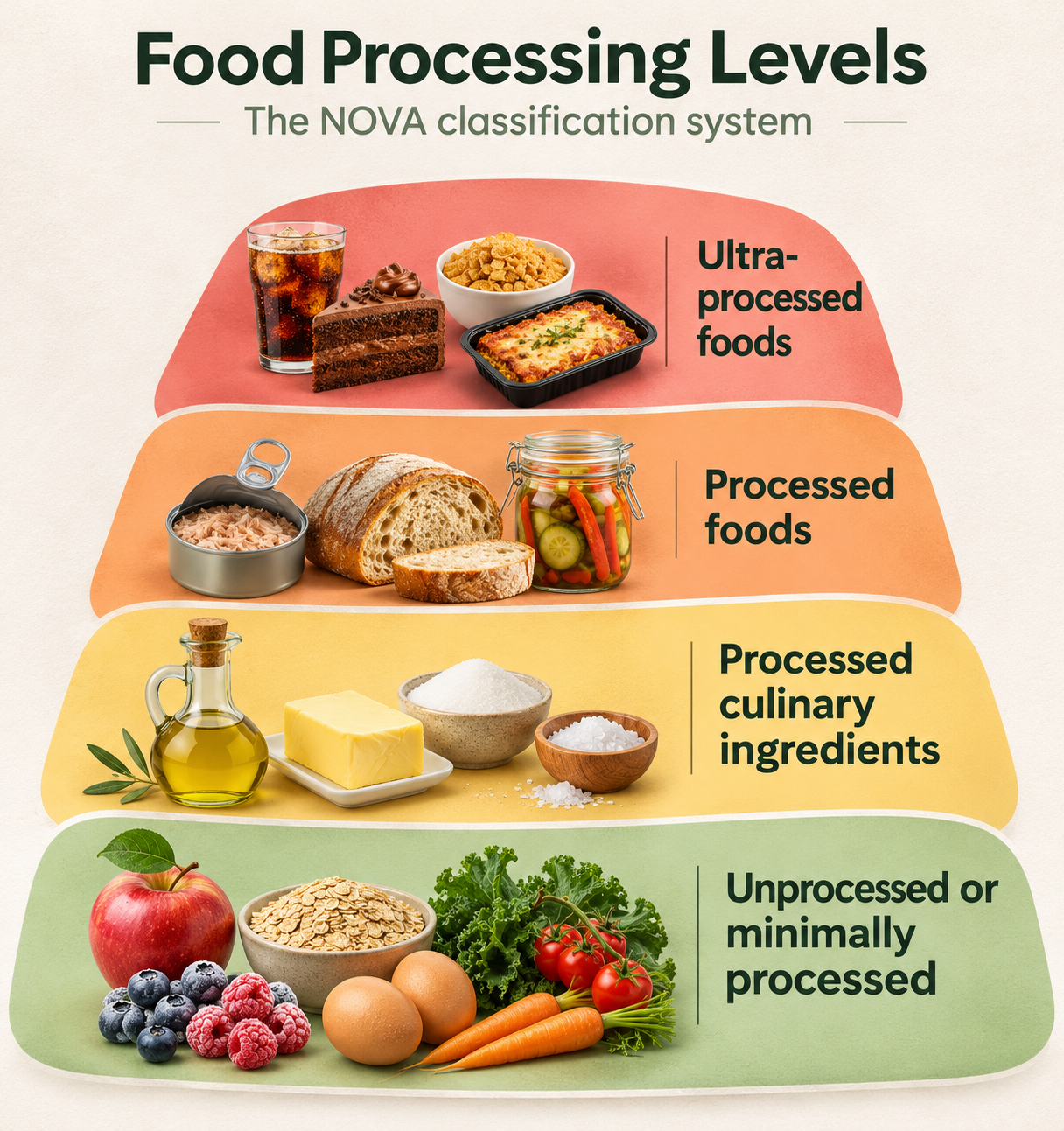
I hope this helps pull all the information together, supporting our gut and metabolic health doesn’t have to be complicated. Eating a variety of whole foods, plenty of fibre and choosing the minimally processed options where possible, can help nourish our gut bacteria, support healthy blood sugar regulation and keep inflammation in check.
Its the small changes we make consistently that can have the biggest impact on long term health.
If you’re struggling with digestive symptoms, energy levels or blood sugar regulation, i offer a free 20 minute call and would love to help.
Lucie xx
www.wellnesswithlucie.com